
Non-toxic natural candle: the guide to choosing the right one
Today, more and more people are looking for a natural, non-toxic candle to scent their homes without polluting the air or harming their health. But between marketing and reality, it's sometimes difficult to navigate.
A scented candle can potentially be toxic due to several factors related to its composition and how it burns. Here's why a scented candle can be toxic:
-
Wax Composition: If the wax used to make the candle contains harmful chemicals, such as paraffin, chemical additives, or artificial colors, these substances may be released into the air when burned.
-
Lead-Containing Wicks: Some candle wicks may contain lead or other heavy metals that are released into the air when the candle burns. Inhaling these substances can be harmful to your health.
-
Synthetic Fragrances: Scented candles containing synthetic fragrances can emit potentially harmful volatile organic compounds (VOCs) when burned. Some of these VOCs are associated with respiratory problems and irritation.
-
Soot Emissions: If a candle burns improperly by producing soot, this soot can be inhaled, which can irritate the respiratory tract and potentially be harmful to health.
-
Chemical Additives: Some candle manufacturers add chemical additives to improve combustion or fragrance diffusion. These additives may contain harmful chemicals.
-
Indoor Air Quality: Burning scented candles in a poorly ventilated space can lead to a buildup of pollutants in indoor air, which can harm air quality and respiratory health.
- Allergens: People sensitive to allergens in fragrances (natural or synthetic) used in scented candles may develop allergic reactions or skin irritations.

It is important to note that most scented candles are safe when used properly in a well-ventilated space. However, it is advisable to choose high-quality candles made from natural waxes , with untreated cotton wicks and natural fragrances, to minimize potential health risks. Additionally, it is recommended to avoid burning scented candles in confined and poorly ventilated spaces.
Which candles are the least harmful?
The least harmful candles are generally those made from natural, high-quality materials, that use untreated cotton wicks, and that do not add harmful chemicals to the wax or fragrances. Scientific studies have shown that some candles can emit potentially harmful substances when burned. Here are some tips for choosing less harmful candles:
-
Natural Wax : Candles made from natural wax, such as rapeseed wax, soy wax, beeswax, or sustainable palm wax, are generally preferred. They burn cleaner than paraffin, which is a petroleum-derived wax.
-
Untreated Cotton Wick : Choose candles with untreated cotton wicks, as some wicks contain heavy metals like lead, which can be harmful when burned.
-
No Synthetic Fragrances : Candles scented with natural essential oils are preferable to synthetic fragrances, as the latter may contain potentially harmful chemicals.
-
No Chemical Additives : Avoid candles containing chemical additives such as artificial colors or curing agents.
-
Phthalate-Free Candles : Phthalates are chemicals used to lock in fragrances in some scented candles. Look for candles without phthalates , as they can be associated with health problems.
-
Label Check : Read candle labels carefully to determine their ingredients. Look for "100% vegetable wax," "pure beeswax," or similar statements.
- Proper Ventilation : When burning candles, ensure the room is well ventilated to reduce exposure to potential emissions.
It's important to note that even candles considered less harmful can emit slight emissions when burned, but these emissions are generally at levels well below health concern thresholds. However, if you are particularly sensitive or have specific concerns, it is recommended to choose high-quality, natural candles without chemical additives.

French Manufacturing and Composition of Atelier Louis Scented Candles
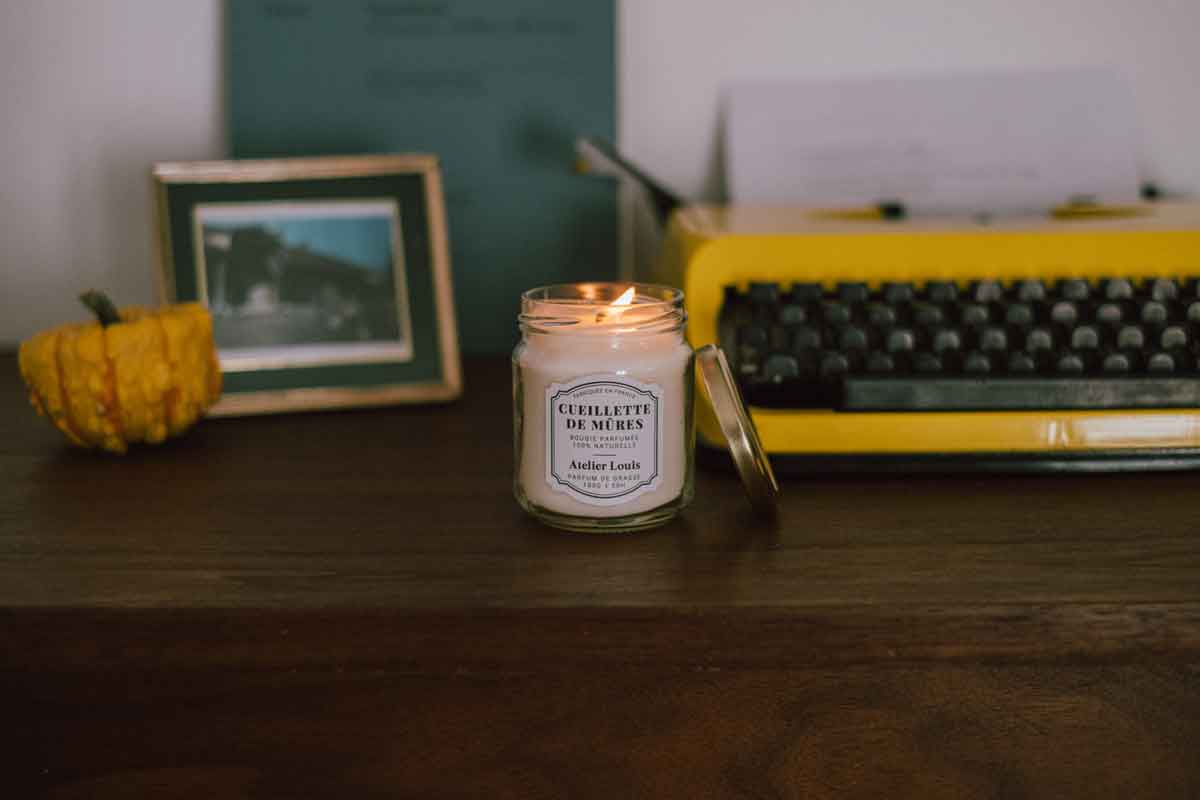
At Atelier Louis , our primary commitment is to offer you sustainable and environmentally friendly products, made from natural ingredients. That's why our natural candles are made with 100% natural rapeseed vegetable wax, guaranteed GMO-free. In addition, our wicks are made from pure natural cotton, guaranteed lead-free.

From the very beginning, we were pioneers in using rapeseed wax and eliminating CMR (Carcinogenic, Mutagenic, and Toxic for Reproduction) components from our fragrances. Our commitment to the planet is also reflected in our choice of components with maximum recyclability, favoring materials from the recycling sector whenever possible.
Our responsible approach doesn't stop there. We're proud to produce 100% of our products in France, from our fragrances to our packaging, including labels and wicks. We also prioritize containers with optimal recyclability, and if no alternative is available, we use recycled plastic, thus eliminating the need to produce new plastic.
The composition of our perfumes is boldly crafted, excluding all toxic substances and raw materials threatened with extinction. Our fragrances are created in Grasse, the world capital of perfume, and lovingly poured by our artisan candlemaker in France's beautiful Lyon region. Each of our fragrances is a unique composition, the result of our passion and dedication to delighting you every day.

Our Perfumes
Our candles offer a burn time of 25 to 50 hours, depending on their size. Our fragrance range is extensive, from floral notes such as Cherry Blossom, Patchouli, and Orange Blossom, to citrus fragrances such as Apricot & Rosemary, and sweet and gourmand scents such as Blackberry and Fig. We also offer aromatic fragrances such as Pine des Landes and Leather & Wood, as well as spicy creations such as Black Tea & Vanilla. Add our Cashmere & Silk to this list for a complete sensory experience.